Tuesday, January 31, 2006

Where do baby librarians come from?

Betsy asks below, in Why Do Librarians Eat Their Young?, "why do practicing librarians insist on experience when hiring newly graduated librarians? This seems both impractical and cruel, doesn't it?"

Betsy raises some good points about practical training for law librarians, and in fact that is a major emphasis of the law librarianship program at the University at Buffalo. We do everything we can, short of tackling the students in the hallway and forcing them into a seat at the reference desk, to make sure that our JD/MLS students gain practical experience before they graduate. We do this in a number of ways:

(1) Practicums and internships. This semester we have two students in the MLS program doing practicums with us. We have also been able to place students in practicums in law firm libraries and the Erie County Law Library, and even, for one student who commutes from Rochester, in the Appellate Division Library, the largest court library in western New York. None of this is unusual; most library programs offer credit for practicums, but with a large program it can be hard for students to find a library that is willing and able to host them. That's why I have worked with my colleagues Jim Sahlem, Joan White, and David Voisinet to find practicum opportunites for students who want them.

What probably is unusual is the degree of support and encouragement the JD/MLS program receives from the Law School. Just as students in the MLS program are able to earn credit for practicums, students in the JD program are able to earn three credit hours for doing a law library internship. Requirements for both practicums and internships are similar: students focus their work in one department (most often Reference, but depending on interest and skills it may be in AV, computing services, or technical services), but also spend time observing in other departments. Students also complete a research paper or a project (such as a training manual for a department, or even a video tour), and give a presentation on the project to the law library faculty.

2) Graduate Assistantship. This is our second year of offering a graduate assistantship for an exceptionally qualified student in the law librarianship program. The Graduate Assistant works as an equal member of the Reference staff, staffs the library as the sole Reference librarian on Sundays, and works closely with faculty in our document delivery and research assistance service.

3) Mock Interviews. We are currently in the middle of our annual round of mock interviews. Since our dual-degree law librarianship program tends to attract students interested in academic law librarianship, we want to make sure that our students are prepared for the prospect of a day-long law school library interview. We have three students doing mock interviews this semester.

4) Teaching Legal Research. This is a course I am planning for next spring. Students will be able to take Law Library Administration in the fall, and Jim Sahlem's two-semester courses in Sources of Legal Information. Teaching Legal Research will be more like a clinical course. Students will do extensive reading on the ongoing debates about approaches to legal research instruction and adult learning theory. They will practice doing legal research instruction using a variety of methods, including classroom lecture, demonstration, and simulations, as well as web-based instruction--and even podcasting!

5) Individual Mentoring. An additional benefit of the extensive opportunities for practicums, internships, and graduate assistantships that we provide is that we--all of the law library faculty--are able to get to know the students and to learn their interests and talents. This enables us not only to advise them more effectively, it also makes it possible for us to give informed and detailed references.

6) Professional activity.
We strongly encourage students to attend the regional ALLUNY meeting and the annual AALL meeting, and to take advantage CONELL and the Mentoring Program. We even provide financial support to enable students to attend AALL.

All of this is certainly a lot of work, but it is also extremely rewarding--both personally and in terms of the new ideas that students bring to the library--and a lot of fun.

I Am Rule 15!

YOU ARE RULE 15!

You're a very helpful rule! You allow the attorney

to amend their complaint once as a matter of

course at any time before the answer is

filed, and also allow amendments in other

cases. If a claim relates back to the

original transaction or occurrence outlined

in the complaint, you can amend the

complaint, even though the statute of

limitations has run. Like a good friend,

you're always there to help out in a bind.


Which Federal Rule of Civil Procedure Are You?
brought to you by Quizilla

So you want to hire a law library director

There are a lot of law school director slots opening up. More still will come open in the near future, as the current tenants retire. We are actually looking at a wave of retirements and openings the likes of which has not been seen since the 1980s when many law schools initially upgraded their library directors to JD/MLS positions.

This might be a good time to consider what law schools should be thinking about when they hire a new director. Librarians think a lot about what we value in another librarian. But faculty members and deans who are not "professional" deans might never have had to consider this question. Be aware that the comments I make here are my opinions alone, but they are probably worth something. I have been a law librarian since 1986, and an active member in the national association and whatever regional association I lived near.

The jobs a law school needs its library director to do:

1. Run the library. Either the director needs to be a good administrator, or needs to hire a second-in-command who is. A good administrator needs to be able to:
a) Make decisions about books, databases, and other materials to purchase;
b) Balance the budget;
c) Manage and supervise the people assigned in the library, exercise
leadership;
d) Oversee the facilities of the library, from rare books, to manuscripts to
archives to the pipes, bathrooms, photocopiers, ceilings, heating/AC, etc.;
e) Make long-term and short-term policies and procedures to keep the library
running smoothly and uproar-free;
f) Coordinate and cooperate with law school and university administrators;
g) Maintain the law school's interests with diplomacy and keep open channels of communication with deans while not overwhelming them with information.

2. Be an excellent faculty colleague. Ideally, the director would be a full member of the faculty and fully engaged in faculty activities, as an equal member. This works best if the faculty understand that the first job takes up a huge amount of what, for most of you, is unscheduled time. The director probably works 11 months of the year, while you are scheduled for 9 months. The director probably has 8 or more hours each day of management tasks, plus, if he or she accepts the task of teaching and scholarship, understand that these are added to an already full-time job.

3. Teaching -- I do like a director to teach. I can see it having an effect on the perception of faculty colleagues if the director does nothing but adminster the library. But to have a tenure-track post and make teaching, scholarship and administration of the library all 3 part of the mix, is a very hard job. I have done it, but am very grateful that my colleagues here at Suffolk understand that administration is the main job, and accept scholarship in librarianship and teaching in Advanced Legal Research as my contributions.

4. Scholarship -- Just as I said about teaching, scholarship contributes to the equality with fellow faculty. But I would slacken the number of articles, count library scholarship, and otherwise, give some credit for the burden of administering the library if that is the primary duty of your director. However, my scholarship very much informs my teaching and how I run the library. I also enjoy it very much. What a wonderful job to be able to combine three things I love! (Oh, plus I get to spend other people's money to buy books! And tell other people what to do -- how much better could a job get!! Oooh -- I think I broke the librarian's code. Don't read this part)

How do you pick the right person? Over and over I see faculty get excited about the school on the resume. Well, I guess the school you graduate from has something to say. But really, by the time you are director material, you have a lot more on the resume to judge by. I would say, instead, look at the accomplishments.

Look at whether the individual has come up through a series of increasingly responsible jobs. Or in the same job, has taken on increasing responsibilities. Look at outside committee and organizational work. Have they served in their professional organization? Have they been active in their university organization? That shows leadership, and leadership is something you want in a law library director. It also shows that they have been learning about how to get things done, and how to work with people and organizations.

You might also look to see if they already have some scholarship done, before it actually counts toward tenure. That would be a pretty impressive statement of how committed to scholarship this person is. Have they already had an opportunity to teach? How did they do? Have they already run a library? How did that turn out? That would be really good information. If you know people who know this person, ask about their reputation. Law librarians tend to know each other pretty well. It's actually a small world out here. Good luck! We all have a stake in getting the best directors into each library. Not everybody fits every school. It's a little like dating. You have to see who suits you, and whom you suit. When it's a fit, the situation is wonderful. Best wishes for a match made in heaven!

Ah, back to Paper Vs. Electronic

I enjoyed this article by legal consultant Edward Poll, at Bloglines. He is looking at the issue from law office viewpoints, which is refreshing. He also comes down firmly on the KEEP the PAPER side. He, like me, thinks we are not yet ready to cut the paper umbilicus.

Teaching -- How far do you hold their hands?


This is a tough question for me. I am care-taker kind of person; a sucker for a hard-luck story. But eventually, even a manipulative student who plays the sob-story card can push me too far. I do eventually come to the conclusion that I am not doing them any favors to keep reminding them about assignments, keep explaining things again. I also begin to feel that it simply is not fair to the other students who paid attention in the first place. They read the syllabus. They read the assignment. They did the work and got it done on time.

How fair is it for me to remind the wah-wah student more than twice? To explain things separately from what I give the rest of the class? Sometimes, it helps me put things into perspective to listen to my daughter vent at home. She is a high school student, but she works really hard, and gets really ticked off at the students who expect a free ride. Especially when they manage to get one.

So the tough question is always, how much is legitimate confusion and need for clarification on the student's part? And how much is looking for a free ride? They just haven't bothered to pay attention in class or read the syllabus. Or perhaps, they are learning disabled and I don't know it. Tough call!

When Words Lose Their Meaning

Today from the always insightful (and beautifully written) Body and Soul:

Many years ago, in a college poetry class, I heard a professor, and a good poet in his own right, struggle to keep William Butler Yeats from being seriously misunderstood. He was reading Lapis Lazuli aloud -- a firm believer that the only way to read poetry is aloud. There's truth in the sound, even the taste, of a word. You have to give him credit for reading these words aloud to a class of freshman:

I have heard that hysterical women say
They are sick of the palette and fiddle-bow.
Of poets that are always gay,

A few random snickers from some guys who apparently shared the antipathy to gay poets....

The poet says that he's afraid that word has been lost to us. And it was such a good word, too. Gay. There's nothing to replace it. Cheap and transitory happiness can't compare to lost gaiety. He says he may have to give up teaching Lapis Lazuli for awhile. WBY is long buried, and the "hysterical women" (mostly frat boys, actually) prevailed. Poets could no longer be gay -- at least not in the sense that Yeats meant.

Yesterday's New York Times put me in mind of that old class. I'm afraid we're losing another good word -- democracy -- and I remember that thirty-year-old sense of loss. There's nothing to replace it.

Sunday's Times carried on its front page a wonderful article on Haiti, one of the best things I've ever read in a mainstream paper. It focuses on the role of the International Republican Institute -- and when they say Republican, they mean Republican -- in overthrowing Jean-Bertrand Aristide....

The meaning of the word "democracy" was pretty dicey even two centuries ago, and it's gotten kicked around especially badly the past five years. But at this point I don't think it's left with even a shred of meaning.

Monday, January 30, 2006

Check This Out! Episode 013: Justinian's Code and Canadian Elections

Episode 013 is up. This is a special all-interview podcast. First I talk with Tim Kearley, Professor of Law and Director of the Law Library, University of Wyoming College of Law. He has recently won an AALL Research Grant for a project to digitize a unique translation of Justinian's Code. After that I chat with our new Canadian Correspondent, Connie Crosby , who explains the recent Canadian elections.

Advice from a lawyer on how to give assignments

From a discussion on law-lib listserve; thanks to Mary Whisner! And thank you, Evan Schaeffer. Why should I not be surprised?

A lawyer offers advice on how to give research assignments to junior lawyers:
http://www.illinoistrialpractice.com/2005/12/giving_legal_re.html

Fun with Metadata

I looked at Dennis Kennedy's blog and was quite taken with his comments on metadata. Apparently the embarrassing discoveries made through inadvertent "signatures" left in metadata in various documents lately have attorneys really nervous. The Vioxx case where the changes to the article just before it went to press, traced to the pharmaceutical company's computers, were a case of metadata biting the author. The case of the authors of a supposedly anonymous memo criticizing Alito being fingered as DNC members and the memo being proved written before Alito was nominated -- metadata strikes again. So, there are lots of CLE programs suddenly about metadata and how to understand what it is and avoid having it bite you in e-discovery.

I have already mentioned metadata tags in my Advanced Legal Research class in connection with Segment searching in Lexis and Field searching in Westlaw. I think I will shoe-horn in a little more discussion about metadata. This is something newly minted law students ought to have heard about.

Metadata just means information (data) about other information. So these are tags to manage other information. Librarians began using metadata tags when we began electronic cataloging. There are "fields" or codes that have to be filled in to describe the book's title, author, size, subjects and more. Those can all be searched by the computer as separate items. So when you use the computer catalog, you can search by author, or title, or subject, or a new combination called "key word" that lets you search words out of titles, subjects and describtive note fields.

Metadata can likewise mean in Westlaw or Lexis, similar codes that the company workers enter to note the style of the case, the date, the court, the judge, the headnotes, the text, etc. And each of those "fields" or "segments" can be separately searched if you either use the Lexis or Westlaw form to fill out or use the command:

da(1992) [in Westlaw, for example, search for a document dated 1992]

DATE(1992) [in Lexis, search for document dated 1992]

Metadata can appear in Word or other word-processor brand documents or PDF files produced from those documents or in Power-point documents. Most simply, the software will list who it thinks produced the document -- whose computer was used. It will list the date it believes the document was produced, and when changes were made. If you have the "Track changes" function turned on -- good for collaboration -- it will keep track of changes and who made them, when. This can be good for your collaboration, but potentially embarrassing if the document gets into the wrong hands. You just have to be aware that these tags exist, know where to look for them [read the short article in the link above!] and THINK before you release documents.

Sunday, January 29, 2006

Why Do Librarians Eat Their Young?

Well, metaphorically. I promise, I have never actually done more than nibble the toes of my own children and then just when they were little babies. By now, they are plenty big enough to swat me down if I tried to even take a lick. My question is really, why do practicing librarians insist on experience when hiring newly graduated librarians? This seems both impractical and cruel, doesn't it?

We want to hire librarians who understand enough about how libraries work in a practical way that we won't spend a long time getting them up to speed. Unfortunately, library schools, by and large, do not seem to have found a way to incorporate that into their training, any better than law schools have. Perhaps an internship period would help? Jim, other library educators out there -- do you have comments about this? There is a real learning curve, and many of us wish to avoid it when we hire. This is sad and unfair to the newly minted librarian, but it is also hard on the hiring library to fill a gaping hole with an underprepared librarian. We are all understaffed and over-stretched. It is asking a lot of our existing staffs to add this much training to their tasks.

Several times, in comments sections of this blog, the question has come up from newer librarians. How can we possibly expect them to come to us with experience when they have just finished library school? Well, there are several ways to accomplish this, but clearly not every library school student can do this. Here are my thoughts on how to get real library experience before you hit the job market:

1) If you are able to get a full-time (best), part-time or even temp job working in a library while you are a library school student, this would be ideal. At many universities, if you work there, either immediately, or sometimes, after a certain period, you qualify for tuition remission. This means you can take a certain number of classes for free.

This would mean you would go slower through library school, but heck, you would be getting more out of it. I truly believe this. I have observed that colleagues who took library school during or after working in libraries, even at clerical jobs, seemed to get far more out of the classes than did I, who went in cold. You would graduate with little or no debt. And you would come out with much better job prospects. You would have that desired library practical experience. We do not specify that you have to have been a librarian; we just want you to have spent time working at something more than a volunteer or student level position in a library. When you work at more than those levels, you see and understand libraries and how they work in a much different way. That is what we are looking for. It can't be taught by theory or explantion in a classroom.

2) Work at your University in a Graduate Assistanceship in the library. That is going to be a different level of expectation than just hiring a student worker. If you can get one of these slots, and you really take it seriously, the reference you get from the librarian can be a good asset.

3) Look for other opportunities that allow you to really work in a library, not just to "help out." That is, if you can volunteer to create a library or run it for your church or charitable organization, that seems like a different level of work than volunteering at an existing library and just helping out. What we are looking for is a level of understanding, but a bit of enterprise is welcome, too.

Happy Lunar New Year!


I have learned that this is not just Chinese New Year. All over Asia, people celebrate this as the biggest holiday of the year. It is called lunar New Year because it is calculated by the first full moon after the winter's solstice. And I think, because it removes the Chinese ethnicity confusion. It is celebrated in many other countries and by many non-Han and non-Chinese people.

This is the year of the Dog, according to the Asian astrology charts. If you want to read more about this, go to Wikipedia to read about the Lunar New Year, and follow fun links to information about the Year of the Dog. A few surprising people who were born in previous years of the Dog are Bill Clinton, and George W. and Laura Bush, as well as Elvis Presley and Sylvester Stallone. That's pretty diverse if you ask me.

There are exciting celebrations if you are lucky enough to live in a city with a large Asian population, like San Francisco, Boston/Quincy, or New York. At our law school, our Asian Law Student organization puts on a celebration as well. Pretty cool, very fun and educational, too.

This great photo of a dragon dancer is courtesy of http://www.skphoton.com/albums/Chinese-Dragon-Dance/Front_of_Dragon_2.jpg

Saturday, January 28, 2006

Call for authors on legal series for librarians

Tomas A. Lipinski, J.D., LL.M., Ph.D., Co-Director and Associate Professor, Center for Information Policy Research, School of Information Studies, University of Wisconsin-Milwaukee, and Neal Schuman Publishers, Inc., proudly announce a new series addressing the legal issues faced by librarians, information professionals and educators-The Legal Advisor for Librarians, Educators, and Information Professionals.

Dr. Lipinski and Neal-Schuman Publishers invite quality proposals from prospective authors in the areas of First Amendment issues (access to facilities, displays, censorship, etc.), privacy and USA PATRIOT Act concerns, copyright issues, ADA compliance, donor relations, the legalities of digital libraries and archives, and any related topics of interest.

From Beyond the Job

Library Insists FBI Provide a Warrant before Seizing Computers

From American Libraries Online:

Police and FBI officials rushed to the Newton (Mass.) Free Library January 18 after determining that an alleged threat against Brandeis University had been e-mailed from one of the library’s computers. But Library Director Kathy Glick-Weil and Newton Mayor David Cohen were adamant that law-enforcement officers comply with state privacy law and obtain a search warrant before they seized the equipment.

Glick-Weil told American Libraries that about 15 police officers visited the library, including three FBI agents who “tried to convince us to let them have the computer,” one of some 20 on the library’s second-floor information technology center, without a warrant. The mayor worked with U.S. attorneys in getting the authorization, and the FBI returned to the library with the papers around 11:30 that night after the library had closed. Glick-Weil said they took three of the library’s public computers.
See the full story here.

McKenzie Method: Wiping out Painful Memories of Embarrassing Moments


I recently discovered quite by accident the power of laughter to help erase that awful tendency of the mind to dredge back up those painful, embarrassing moments when you think you might die. The very worst moments may require laughing quite hard with really trusted friends and loved ones on more than one occasion. But it is quite remarkable how it just removes the thorn and the poison from the wound.

Perhaps all you wise readers out there knew this long ago. If so, I am sorry to waste your time. I actually heard something to this effect twenty years ago. But it was not quite the same thing and I certainly did not process it the same way. When I went to my first AALL, the speaker at CONNELL (program for newer law librarians) was Bob Berring. He told us that his uncle always said, "Whatever doesn't kill you, makes a darned good story." This is almost but not quite what I am talking about. It does explain a lot about how fearless Bob always was in his career; how he could just try things and not be afraid of failing or embarrassing himself. He actually had this method down from the start, I guess.

In fact, I only need this for extreme embarrassment situations. Like the other day, teaching in front of my class. I laughed in an explosive way at something, and out exploded an audible fart. OOOH, talk about dying a thousand deaths. Nobody really reacted, so I can hope that the laugh actually covered everything. But still, sheesh! It's very hard to carry on, and to go back and face a class if you have a dialog in your mind about what people are thinking about YOU!

My miraculous discovery was that by telling my husband and laughing with him about it; And then calling a dear friend and telling her and laughing with her about it; Now the thorn is drawn from my mind. And I hope there will be no poison festering there. So the next time I stand in front of that class, I won't be worrying about anything but teaching (I hope!).

Ordinarily, it's enough for me to tell myself that nobody else but me is worrying over X (my uneven hem, my smudged glasses, my mis-spoken word). And that usually is enough for me to let go of worries about what other people think of me. It probably doesn't matter if it's true, either. The other thing I tell myself is that if they are worrying about it, they need to get a life!

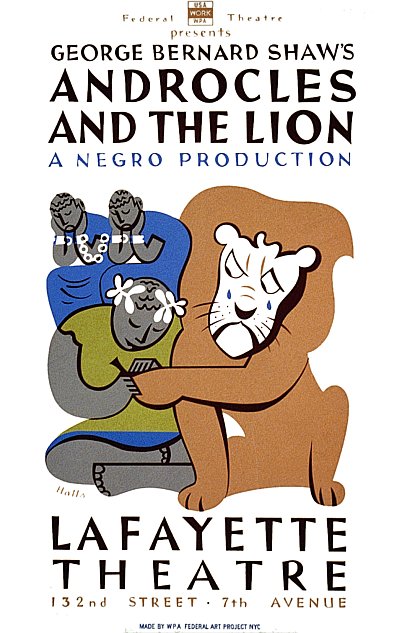
This wonderful poster of Androcles pulling the thorn out of the lion's paw is from posters created by the WPA project in the USA for a play written by George Bernard Shaw, with a Black production.

Friday, January 27, 2006

Happy Birthday, Amadeus! 250!


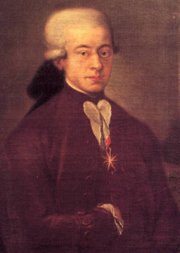
Today is Mozart's 250th birthday. Whatta guy! While Amadeus was a terrific play and movie, there seems little doubt that he died young of natural causes, probably rheumatic fever. I never quite liked the insane way that Tom Hulce played him in that movie. Poor Salieri! Tarred forever by that play and movie. Take a look at Wikipedia and this terrific aging but (gee, the guy's dead, how much new stuff is happening) website: http://www.mozartproject.org/ . If I hear a piece of classical and it sweeps me up, I can just about count on it being Mozart. (Beethoven sometimes fools me in his quiet pieces, though!). Hope you are happy, Wolfgang Amadeus! This painting of Mozart at age 21 in Bologna, is from Wikipedia.org.

Thursday, January 26, 2006

Now the Hat Trick: Why Law Libraries?


Here is a really dangerous question for me to ask. Sort of like a sword swallower with hiccups. (This picture of a daring sword-swallower comes from a website devoted to the dying (hah!) art: http://www.swordswallower.org/swordswallowing.html). There are two parts to the question. Why have specialized libraries for law? And why do law schools still need libraries? They are both linked, and both are very dangerous to things I hold dear.

Why have specialized libraries?
There is a very nice article in Law Library Journal dealing with the founding of the American Association of Law Libraries If I recall, the main impetus seemed to be the feeling that legal researchers were not well served in general libraries, and that legal materials were not well-understood by general librarians. That may not have been fair, but since the explosion of legal publications in the century since, it is probably more true now than ever. Who can keep up with the changes in print: looseleafs, newsletters, new titles and new editions? Things change more rapidly all the time, and the online services keep adding and changing features. Having specialized librarians undoubtedly helps for reference, research and acquisitions management.

I recently heard a lawyer who visited a university in Europe talk about trying to use an integrated library where the law materials were mixed into the general collection. He said that being in a different country was not a problem -- he spoke the language fluently. But the integrated library drove him nuts. Unfortunately, our discussion did not reach a point where I could understand if his irritation really could be analyzed better than that or could be chalked up to "he was used to a different organization in his home library." I do think it helps to have the materials close together, but a subject organization, like Dewey or Library of Congress may well achieve that as well as a physically separate library. After all, the Library of Congress call number system relegates all the law materials to the K classification. So, sadly, I am not able to do more than voice my personal opinion that specialized librarians make a big difference, and therefore, a specialized library is good.

Do Law Schools Still Need Libraries?
Yes! I answer resoundingly. Here are the roles that the Law Library fulfills in my Law School:

* Teaching lab - We still have the entire 1-L class tour through the Library and each year, have 3 hands-on workshops often enough that each 1-L student participates in each one through the Suffolk version of LRW. We teach them on Digests, Statutes and Shepards. When Rick Buckingham pioneered these, the professor he worked with and her students were so impressed with the difference it made in their understanding of how to do the research compared with what they got in classrooms. We also teach most of the Lexis and Westlaw classes, cranking through all the 1-Ls in each, and offering specialized versions. The LRW teachers also meet their classes in the library for difficult assignments.

* Study Area - We purchase lots of study aids for the students (of course), and 2 copies of every required textbook, as well. At exam time, we hand out a hundred dollars worth of hard candy each semester and disposable ear plugs as well. Of course, like every other law school library, we offer extended hours during the exam reading period.

* Social Area -
(a) Students and other users
Every librarian knows that an awful lot of social activity goes on in the library. (Some more hanky than panky. I don't know what there is about reading law that seems to stir up some folks' libido. We actually added windows to the study room doors!) But, less hank-ful activities, too. There are soft-seating areas around tables where groups of students naturally congregate and chat. There are the study rooms, where we actually encourage groups of students to talk and work together. Teams and study groups and friends meet in the library to work on projects, study together or plan things. We all know that Bill and Hillary Clinton met in Yale's law library. I imagine a lot of legal couples did. And of course, there are the ubiquitous cell phones. These may actually count as anti-social, though, in the library.
(b) Faculty and Deans
I host a Faculty Tea every fall. This is quite the affair. I bake scones from a recipe I adapted myself. I shake cream til it's nearly butter. I bring in home-made jam. I have china tea-pots and make fresh tea. We have a very beautiful room with a lovely view of the Boston Common on the top floor of the library, that is set aside for parties. The good thing is it brings faculty into the library who might not otherwise come. I invite the reference librarians so they meet, face-to-face, the folks who have been helping them. They walk through a beautiful library, past shelves of books (even if they don't use them). And they have a beautiful, civilized, break, and attribute it all to the LIBRARY.

* Research Area - Gasp! Some people still do research in the library! There are a good fifteen or so professors who pop in fairly regularly for research here. And far more who ask the librarians to do research for them. This has been one of the library's services that has increased in usage most since I have been here. There used to be perhaps six users and only two heavy users. Now there are twenty-five regulars and of those probably six qualify as heavy users.

* Teaching Resources - Librarians will come to classes on request to teach students about research on a topic. On occasion, a librarian has continued throughout a course, nearly co-teaching it at the professor's request. The Director of the library does teach Advanced Legal Research and has co-taught Tax Research and Practice with a tax professor. Reference librarians prepare bibliographies for deans and for professors. They will also prepare webographies and other handouts for professors on research resources or techniques.

* Purchasing/Budget Management/Problem Solving - We buy the books, make sure the databases are there, CDs are available when faculty want them, reserves are all fixed, and buy stuff for faculty offices. And we make sure they KNOW we do it. Not too obtrusively, but we don't make it too invisible, either. And if they have any problems -- they get a bill sent direct to them (horrors!), or they don't get the pocket part, or whatever, WE MAKE IT RIGHT. A phone call. We make it right. But we also make sure they know IT WASN'T OUR FAULT. AND WE ARE THEIR FAIRY GODMOTHER. IF THEY ARE NICE, WE ARE NICE. (at least, I hope they understand that). I have a fabulous staff in acquistions and all of technical services right now. That is who takes care of all this and makes all this stuff work. That group is very important! We want the dean and the university to know that we will take care of the budget as well as we can (boy is that hard these days!), while the faculty feel like we will get them anything they need (boy is that hard these days).

So, do YOU think the law school could get these things done without a law library? Do you think they could get these services from the university library? Do you think they would be smart to save money and just count on Westlaw and Lexis and close us up? I hope I've convinced you that there is more to a law school library than just finding a case.

Work Avoidance Techniques


Come learn from a past master! In law school, at exam time, I would wax floors and bake cookies rather than study. It was the only time in my entire life that I ever waxed a floor! My husband used to love exam time.

I am actually using my blog (don't you love it?) to avoid finishing some work which I really have to get done. Oh, but it's so boring. So, I just have to post something on the blog today. MMMM. All those folks out there counting on me.

Well, we can pretend they're out there, can't we? Work avoidance comes first! This dynamite image of scrubbing floors comes from Project Gutenberg:
http://www.gutenberg.org/files/13126/13126-h/images/183.gif

Wednesday, January 25, 2006

And What of Law Schools?

Now that Betsy has neatly disposed of legal theory (ha!), let us look at legal education. We are all about to discover just how badly acculturated she is!

My maternal grandfather was a lawyer, from a long line of lawyers, in a small town in Indiana. His ever-so-great grandfather had been designated a lawyer in the then territory merely by virtue of being the only man around who could read and write (as it was explained to me), and I supposed, people trusted him. He was a Quaker, in case that affected trust.

For a number of generations, father trained son, by "reading the law" in the office. They collected the statutes (such as were published) and such reports of decisions as could be gotten. And circuit judges rode through periodically to hold court.

By my grandfather's generation, there were law schools. I believe he was the first in his family to attend law school, with his brother. He did not really want to be a lawyer, but his father expected it of him. It was the family business, and one evidently did not disappoint that father. So rather than be a draftsman, my grandfather went to law school. He entered the family law office, and took whatever cases presented themselves. He was apparently quite unhappy at first. But, with time, he was able to specialize in trusts and estates, and liked his practice much better.

Why did law schools develop? Was there a sort of need for fairness in access to training in law that was blocked by the apprenticeship method? I do not think this is true. Abraham Lincoln, a young man of poor means and no family was able to read the law, and most law schools until the last half of the 20th century really did not welcome people of color, Jews, women, or Catholics.

So, why did law schools develop? A quick scan for an article that summarizes the development of legal education in the United States finds a number, but I really enjoyed reading Searching for Context: A Critique of Legal Education by Comparison to Theological Education, by Professor Melissa Harrison, 11 Tex. J. Women and the Law 245 (Spring, 2002). I had never heard, instance, that the first private law school in America was founded as early as 1784! It was Litchfield, I presume in the Connecticut town of that name. The students continued studying much like the apprenticed lawyers, but worked in groups. They had a teacher who interpreted what they observed in their daily practice. Harrison, at 246. It sounds to me a lot like an guided externship.

It was in the 1800's that law schools grew out of universities, like Harvard. I found many articles celebrating the centennial of individual law schools and detailing their own histories. It was Harrison's article that analyzed the development across many universities. She saw affiliation with research universities as building the idea that legal training should be theoretical just as other disciplines at universities are. Harrison, 246. We all know stories of Dean Langdell at Harvard. His insistence on aligning legal education with science education, and philosophy was meant to make teaching law seem more theoretical and more like a classical science. Langdell's talk of laboratories and Socrates and case method are the most extreme apotheosis of the push to align law with other theoretical disciplines at universities.

Interestingly enough, the American Bar Association, which issued the MacCrate Report in 1992, calling for more skills-based training in law school, did the same thing much earlier. Harrison records the A.B.A. protesting that the case-method of study alone was poor preparation for legal practice in 1921. Harrison, at 246. Such criticism continues and had resulted in developments such as Legal Research and Writing curricula, Law Clinic, Internships and Externships and other skills courses. Law schools, bar members and other observers continue to observe the disconnect between legal education and the needs of the practicing bar. It is a common observation that a recent graduate from law school will not know how to "find the courthouse door." My own experience was that the first year after law school required more intensive learning and was far more stress-filled than any year of law school, including 1-L.

It would be interesting to ask my grandfather what he thought of those first years after he began practice. I know he did not like the multi-tasks, but I am not sure if his unhappiness was that he disliked the jobs or clients or that it was stressful because he did not feel confident yet. Perhaps a mix. Maybe things were not so different and just not so well-reported.

So, to the original question, and exactly how rude is Betsy willing to be? How much is she willing to bite the hand that feeds her? This is, I am afraid, rampant speculation, on my part. I believe law schools developed in tandem with bar examinations and bar associations. The need for some sort of accrediting process, some agency to oversee in a more official way the education and give imprimatur that the fledgling lawyer was good enough was probably what drove the development of all three things. As soon as one state developed one or another or more, other states felt pressured to follow suit. Who would not want to step into the modern age and assure their citizenry that their attorneys were as certifiable as the milk and meat? If I am not mistaken, this was long about the same time that food certification was beginning to develop, too, as well as certification of other professions.

On the other hand, what a wonderful gig for all of us! I am afraid to let too much cat out of the bag, but you, the viewer, have but to open your eyes and think with your own brains to realize that law schools not only are good for training law students. They are WONDERFUL for housing law professors and law librarians and all the affiliated people. That's probably enough said.

Not Alone

And speaking of saints, while I was plowing through that prayer of St. Patrick's for that Pink Invocation the other day, I noticed that the Saint gives credit to lots of others for his simplest accomplishment. In the early parts of the prayer, "I arise this day through ..." begin a long catalog of everybody that Padraigh believes helped him get up today, from Christ, to angels, to the sun and moon, wind and fire. It's a very medieval prayer, but worth contemplating for this:

No one of us accomplishes a single thing in our lives by ourselves.

In America, since the rise of the penny-dreadful novels that romanticized the Wild West, we have created a mythology of the self-made man, who acts alone. We believe that he and he alone (never a woman, and nearly always white) is responsible for his success or tragic failure.

This is demonstrably a load of hooey. Just as much as the mis-spoken idea that we are all equal, this is at the heart of the American mythology, and it is a mistake of the original credo. We all have the same rights under the Constitution, and should be treated the same under the Law. We have the same opportunity to succeed to the limits of our native ability; we are not equal. We are not starting from the same starting line in the race of life. Some of us inherited better brains. Some inherited better looks. Some inherited better bodies and reflexes. Some were better treated and trained and educated as children. Some have more inherent drive and ambition. And some of us arrive with more wealth, and are taught how to manage it.

None of those things make us EQUAL. And none of those things come from us alone. We get those things from generations before us, whether we are speaking of genetics or wealth, or teaching, or even ambition. Even just the help of friends and neighbors as we grow up and live makes a difference. If you lived in a close-knit, loving family or in a distant, unloving one; if you grew up in a supportive neighborhood or town, or a part of town where everybody minds their own business, it makes a difference in you.

All the people in your life, are lifting you up. I arise this day, by the power of the loving, caring and kind people in my life. I arise this day throught the light of the sun, brilliance of the moon, splendor of fire, speed of lightning, swiftness of wind, depth of sea, stability of earth, firmness of earth, firmness of rock.

Tuesday, January 24, 2006

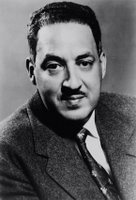
Saint Thurgood

From The Green Knight

I could go for that:

NEW YORK - Episcopalians from a church where the late Supreme Court Justice Thurgood Marshall worshipped are asking their denomination to name him a saint.

Marshall, who died in 1993, was a towering figure in the civil rights movement and the first black justice to sit on the nation's highest court.

Members of St. Augustine's Church in Washington, D.C., will seek initial approval for the honor Friday from delegates to the convention of the Episcopal Diocese of Washington....

If approved, Marshall's name would be added to the Book of Lesser Feasts and Fasts, a primary worship book for the New York-based denomination. A feast day in his honor would be celebrated May 17, the anniversary of his victory in Brown v. Board of Education....

Criteria for Episcopal sainthood include whether the nominee was an 'extraordinary or even heroic' servant of God and whether the person served humanity on behalf of Christ, according to the worship book.

Among other contemporary Episcopal saints are the Rev. Martin Luther King Jr. and Florence Nightingale.

Why is there Law?


Am I feeling ambitious this morning or what? Too much sunshine.

I have never felt comfortable with the Natural Law theory that we are uncovering something that existed before there were humans. I truly believe that Law is fundamentally a human construct. We build it in harmony with our society, as a tool of those in power. Kings and now governments of all types create law as a tool to help them govern. Tax law extracts and redistributes wealth. Conscription law does essentially the same thing with human beings instead of money; it gives the government bodies to spend.

As you can see from the above paragraph, I do not necessarily believe that there is any connection at all between law and justice or law and morality. Law does not necessarily achieve any kind of good for the populace at large. It is a tool first and foremost of the governing people, and one needs to understand that. When clever, well-intentioned lawyers work hard, sometimes, they can make the Law work for the individual person, and not for those intended by the government. However, at its best, Law achieves Justice. When it does that, the law and government achieve the consent of the governed.

When a government subject to election by the populace fears that it is losing the consent of the governed, it must follow one of several courses. It must re-organize its government and laws to better meet the approval of the majority of the governed. If it is not willing or able to do this, it must either

1) exercise leadership such that the governed are willing to hold their disapproval in abeyance (Think of Franklin Delano Roosevelt or Winston Churchill in World War II, asking for huge personal sacrifices from their populations); or

2) distract the majority of the populace such that they lose track of their anger at the government. My opinion is that this is the course chosen again and again by the current Bush administration. I suspect I can think of nice examples from most presidents during my lifetime (sigh), but I am most angry at the current administration, aided and abetted by the media, and our Congress.

We are a self-governing people, the most free in all of history. We supposedly have the power to sweep away our government. Wendell Phillips, abolitionist and orator said, "Eternal vigilance is the price of liberty." I think we got distracted. Better start paying attention. We are losing our country. We are losing our laws.

Monday, January 23, 2006

Confessions of a Stack Rat

Dan Filler, writing in Concurring Opinions: Confessions of a Stack Rat:


I've been thinking a lot, recently, about the purposes of law libraries. In part that's because of Dave Hoffman's insightful post about these institutions. The bigger reason is that I'm on the library director search committee for one of the two law schools Dave mentions: the nascent Drexel University College of Law. (Reading between the lines: I will be joining Drexel Law this fall as an inaugural faculty member.) In this context, I've confronted an issue that is front and center for librarians - the rise of the digital collection....
I will do my duty in hiring a new library director who lives in the present, complies with ABA and AALS guidelines, and services the research needs of students, faculty, and lawyers. But I hope our new librarian won't be insulted if, once in a while, I wander off to one of those grand old libraries (will they soon call them book museums?) Drexel is only two or three blocks from the Amtrak station, and from there Providence is a straight shot. I'm not sure I need to browse Somer's newer oeuvre, such as Eat, Cheat and Melt the Fat Away, but a few quiet moments in the H.P. Lovecraft collection might do this boy good.
(Hat tip to Joe at Law Librarian Blog.)

I Am the Golden Rule!


You are the Golden Rule! You presume that the legislature would not want to apply the statute to achieve an unreasonable or absurd result inconsistent with its purpose. It's not what's on the surface that matters for you, and you try to do what's best in any given situation. You're a bit unpredictable, but you don't mind.

If that's too pink, let's think...

When I first became a law librarian, I was a LAW librarian. this was interesting, because when I was a lawyer, I was never an attorney, I was always a lawyer. I always demystified what I did, and always low-keyed my presentation to my clients (I was a Reggie fellow at legal services).

But after I got my MLS, and came to work at a law school library, I wrapped myself in the majesty of my law degree and flaunted my bar card. My legal credentials became more important to my self-identity than they ever were before. It was a very interesting transition. I got my JD first, then the MLS.

To society, and I guess to me, too, I stepped down in the world. Going from lawyering to librarianship seems like that to those who don't know better. But I know better now. I am so pleased to be a librarian, and know I was so lucky to have wandered into this profession. Staying in law would have been a death to me, if not literally, then morally and creatively. This profession is wonderful (except for those tiny details of pay level, public perception and the fact that you nearly always have to travel to move forward in your career).

So to all those true-blue feeling librarians, I am sorry if I got too pink there. I, too, have been where you may be now. I hope that, eventually, you will come to feel more comfortable, if not with the color, then with the ethos and nurturing side of our profession. That's what I mean with pinkness, mostly.

Pink Invocation


There is an ancient and mighty prayer attributed to St.Patrick, called the Breastplate of St. Patrick or the Deer's Cry, because it seeks protection. It is much longer than the part usuallly quoted. You can see the entire prayer by searching those terms on search engines or looking at http://prayerfoundation.org/st_patricks_breastplate_prayer.htm

I hope it will not seem sacrilegious to other Christians if I use the most-often quoted portion of that prayer here, and modify it to contemplate the place of pink and what it stands for in my life and in librarianship and in our world today.

I have previously written a blog page just on Pink itself and how I went through first a little girl stage of loving it, then an older girl stage of mistrusting how it appeared to be segregated. In our culture and time, the color pink has been used to stand for femininity, and all the good and also the bad that society attributes to that concept.

It means nurturing, caring, mothering. It means girls giggling and doing each others' nails and hair and sharing secrets. It means shopping, and having tea, and crossing your legs and wearing fingernail polish and hose and high heels and party dresses and lipstick. It means baking and cooking and taking care of people when they are sick. It means changing poopy diapers and getting up with croupy babies, even when it's not your turn. It means putting your career second even if you are the more talented or smarter one. It means obsessing about your weight and appearance. It means good things, but it also means bad things. It can also mean thinking twice about getting on an elevator if it's a dark hallway and the elevator has just one man on it you don't recognize. I am so glad I live and my daughter lives even more in a time when we are free to take the parts of Pink that we are comfortable with, and skip other parts. I wish we were free to skip the dark elevator part, too!

The thing about librarianship, nursing, secretaries, K-12 teaching and other positions that have become mostly feminine professions, is the men who take jobs in these fields get tinted pink, too. It isn't fair. It makes no sense. And if it happens, it should be a positive thing. For lots of reasons, it is a very good thing to have men in these professions. I certainly do not want to scare guys off from the field. But it is a truth that there is a shading in ignorant peoples' minds, and it would be unfair to hide it or say it was not true. I hope we can change that. I hope we can make the Pink of librarianship a positive for both genders, and remove the stigma for all of us. So, here is my version of a portion of St. Patrick's ancient prayer:

Librarian's Invocation

Pink bring caring with me, Pink before me, Pink behind me,
Pink bring caring in me, Pink beneath me, Pink above me,
Pink on my right, Pink on my left,
Pink when I lie down, Pink when I sit down, Pink when I arise,
Pink bring caring in the heart of every one who thinks of me,
Pink bring caring in the mouth of everyone who speaks of me,
Pink bring caring in every eye that sees me,
Pink bring caring in every ear that hears me.

Sunday, January 22, 2006

Welcome Aboard, Maryland! And Good Luck!


Read in the papers where a brave judge in Maryland, Circuit Judge M. Brooke Murdock struck down a 33 year old law against gay marriage Friday declaring it violates the state constitution's guarantee of equal rights. She stayed her order immediately so that the state's attorney general could appeal to the Maryland Appeals Court, which he did that afternoon.

So far, Massachusetts is the only state in the United States which recognized the right for gay couple to marry, since May, 2004. More than another dozen states have reacted to Massachusetts' Goodridge decision by approving constitutional ammendments banning gay marriage, while Vermont and Connecticut provide for civil unions for gay couples, but not marriage. It makes a difference if you know people who are affected by these decisions. If you know folks who have lived together faithfully through good times and bad, raising kids, but then find that when their partner gets taken to the hospital, they aren't the one called. It's the estranged family who long-ago washed their hands of the partner, who get the call, and probably won't call the loved one either. This is a civil right matter, and matter of fairness and kindness. Good luck to the folks in Maryland!

So, here is a little song parody I wrote, if you know the musical Oklahoma, this goes to the title song:

Massachusetts! (to the tune Oklahoma!)


They couldn’t pick a better time to start in life
It ain’t too early, it’s just about right.
Starting’ as a woman with a brand new wife.
Soon be fightin’ in a brand new fight –
Brand new fight,
Gonna be tight!

Gonna try amendments,
Statutes and the fed’rals.
Bringin’ in protesters,
Media, an’ in gen’ral
Makin’ a stink about our private lives.
Kickin’ up dust over little gay dives.
We won’t gripe if you choose life straight.
Why are you filled with such gay hate?

Mass – a -- chusetts,
Where our swans are Juliets it seems!
Where the SJC
Says gays can wed
And the cops can’t roust us out of bed!
Mass – a – chusetts!
Someday soon my honey lamb and I’ll
Raise a fervent prayer
We live someplace where
We can choose to walk a wedding aisle!
We know we owe a special debt
To the plaintiffs in the case that let
Eeowr! Supreme Judicial Court
Find our right to wed’s
A civil right, Mass -- a -- chusetts,
Mass -- a -- chu -- setts, Thank God!


The beautiful swans are courtesy of www.indianspringswildlife.org/

Saturday, January 21, 2006

Open Stacks: It's not a podcast unless...

Greg at Open Stacks shares my frustration:

It's not a podcast unless...

I'm becoming mildly frustrated (don't have time to be more impassioned, sorry) by entities in the LIS world who slap some mp3s on their website and call it a podcast. After all, podcasting is about harnessing the power of syndication to distribute audio content, not just making audio content available.

I love that there is an mp3 of Barbara Quint's Searcher's Voice column. But sorry, folks: no feed, no podcast. What we're left with is misappropriation of a buzzword that misses the whole point of podcasting.

I just finished speaking with Chad about the new Alden Library Podcast Tour. When I see such a page, I expect there to be a feed for the audio content. Otherwise, I'm just staring at a cluster of audio files. In this case, there actually is a feed with the requisite enclosures, but it's the feed from their News Blog. We talked about some avenues for clarification and I'm confident that Chad will be fine-tuning the presentation in the forthcoming weeks. It's a laudable first effort and worth checking out.

But I can't stress enough that the magic of podcasting lies completely in the syndication. Not enough of our patrons understand this and the last thing we need to do is contribute to their misunderstanding.

Care and Feeding - Filling in the Gaps

One thing law school librarians do very well is care and feeding of the students -- not literally, feeding, silly, but taking care of their bruised egos and psyches. For instance, many law school libraries offer special treats at exam time. At St. Louis University during my time there, Miss Searls made Christmas wreaths of hard candies that were put out for law students. Wow, talk about time-consuming! But the students certainly appreciated the candy. At Suffolk, we don't bother with the wreath, we just put hard candies into bowls, and offer it at both exam periods, along with disposable ear plugs. I have heard back from students, at least in favor of the candy, though the ear plugs go fast, too.

Last semester, Suffolk reference librarian Susan Vaughn had the inspiration to further reduce student stress by offering licensed massage therapists at those massage tables you see at airports. We tried to get the deans to spring for it, but they were unwilling, partly, I think because it was short notice, and the Dean of Students was not available right at decision time. So, I managed to raise the money from donations and we ran it, with music, two massage tables handouts and food, and drinks, on the nights before the two most stressful exams for the largest part of the student body. I was very impressed with the wide number of adminstrators and professors who were willing to chip in for the project. They were terrific. I hope in the future, it will be repeated, or something like it, supporting students at a terrible time. I had really forgotten just how awful it is to be a law student at exam time until I was talking with some of them. Wow! It took me back.

And now I am working on a project to add a little loveliness to the public ladies rooms in the library. They are decent enough in our new building, and kept quite clean. But there is no place in the building to buy tampons. The architects put great big machines in every single ladies' room to sell such things. But the deans decided they did not want to handle the money, I guess. So the machines sit there, empty, adding insult to injury, because they are not only empty, they also take up space that could be used for a shelf to put your stuff on, so you would not have to lay your books or purse on the floor (ugh!!). That creates a very small opportunity for a tiny table beneath those machines. I have bought some very pretty metal tables with tile tops, and cute enameled tin flower-pot holders. I have silk flowers for one side, and I have free tampons for the other. One week from this Sunday, I will be able to drive them down, and fix them up. I hope they fit -- they seem to from my measurements! I hope they look good and cheer the law students up.

I can't imagine what they guys would want in their bathroom. My husband the male librarians and friends have not been able to give me suggestions. We are giving all the public bathrooms small bottles of dish detergent to wash out their re-usable spill-proof mugs (I hope!). Maybe they'd like ice in the urinal. Hmmm.

Friday, January 20, 2006

Response on Tulane

Lance Query, Interim Director of the Tulane Law Library, today posted this message on the lawlibdir listserv. I a