Sunday, February 05, 2006

Censorship and Information Manipulation

Marie Newman on this blog had posted a very interesting comment about Wikipedia banning certain Capitol Hill aides from modifying entries on either their own or opposing political figures on the online encyclopedia. They had been engaging in either buffing up and manipulating the entries or in "having a little fun" at the expense of the opposition. Fortunately, the Wikipedian masters watch carefully over the encyclopedia and caught the mis-information, corrected and banned the perpetrators. Marie's excellent entry got wiped out in the current Blogger hiccup. I hope she will re-post as it was a thoughtful piece considering evaluation of online information.

Folks with a longer memory may recall when George W. Bush took office there was a minor to-do. The story went that Clinton's aides had suppposedly removed the W keys from every keyboard in the Whitehouse offices as they vacated the premises. Well, it all turned out to be a lie, a bit of mis-information spread by those fun-loving Bush aides who thought it would be entertaining to smear Clinton's crew as they left. Another case of information manipulation.

And here is another, longer term situation, a combination of attempted censorship and information manipulation. Jim Hansen, the director of NASA's Goddard Institute for Space Studies has been working since the 1980's to get out to the world at large the idea that global warming is real, and we must change our ways -- NOW. The political establishment and often, the scientific establishment as well, have not been happy with him. That he has persisted, and done a masterful job of using their attempts to silence him or manipulate his information into pablum is to his credit. I include a link to a NY Times online article, but I am not sure it will work. Here are key excerpts from the article:

Dr. Hansen, 63, a physicist who joined the space agency in 1967, directs efforts to simulate the global climate on computers at the Goddard Institute in Morningside Heights in Manhattan.

Since 1988, he has been issuing public warnings about the long-term threat from heat-trapping emissions, dominated by carbon dioxide, that are an unavoidable byproduct of burning coal, oil and other fossil fuels. He has had run-ins with politicians or their appointees in various administrations, including budget watchers in the first Bush administration and Vice President Al Gore.

In 2001, Dr. Hansen was invited twice to brief Vice President Dick Cheney and other cabinet members on climate change. White House officials were interested in his findings showing that cleaning up soot, which also warms the atmosphere, was an effective and far easier first step than curbing carbon dioxide.

He fell out of favor with the White House in 2004 after giving a speech at the University of Iowa before the presidential election, in which he complained that government climate scientists were being muzzled and said he planned to vote for Senator John Kerry.

But Dr. Hansen said that nothing in 30 years equaled the push made since early December to keep him from publicly discussing what he says are clear-cut dangers from further delay in curbing carbon dioxide.

In several interviews with The New York Times in recent days, Dr. Hansen said it would be irresponsible not to speak out, particularly because NASA's mission statement includes the phrase "to understand and protect our home planet."

He said he was particularly incensed that the directives had come through telephone conversations and not through formal channels, leaving no significant trails of documents.

Dr. Hansen's supervisor, Franco Einaudi, said there had been no official "order or pressure to say shut Jim up." But Dr. Einaudi added, "That doesn't mean I like this kind of pressure being applied."

The fresh efforts to quiet him, Dr. Hansen said, began in a series of calls after a lecture he gave on Dec. 6 at the annual meeting of the American Geophysical Union in San Francisco. In the talk, he said that significant emission cuts could be achieved with existing technologies, particularly in the case of motor vehicles, and that without leadership by the United States, climate change would eventually leave the earth "a different planet."

The administration's policy is to use voluntary measures to slow, but not reverse, the growth of emissions.

After that speech and the release of data by Dr. Hansen on Dec. 15 showing that 2005 was probably the warmest year in at least a century, officials at the headquarters of the space agency repeatedly phoned public affairs officers, who relayed the warning to Dr. Hansen that there would be "dire consequences" if such statements continued, those officers and Dr. Hansen said in interviews.

Among the restrictions, according to Dr. Hansen and an internal draft memorandum he provided to The Times, was that his supervisors could stand in for him in any news media interviews.

******

The fight between Dr. Hansen and administration officials echoes other recent disputes. At climate laboratories of the National Oceanic and Atmospheric Administration, for example, many scientists who routinely took calls from reporters five years ago can now do so only if the interview is approved by administration officials in Washington, and then only if a public affairs officer is present or on the phone.

Where scientists' points of view on climate policy align with those of the administration, however, there are few signs of restrictions on extracurricular lectures or writing.

One example is Indur M. Goklany, assistant director of science and technology policy in the policy office of the Interior Department. For years, Dr. Goklany, an electrical engineer by training, has written in papers and books that it may be better not to force cuts in greenhouse gases because the added prosperity from unfettered economic activity would allow countries to exploit benefits of warming and adapt to problems.

In an e-mail exchange on Friday, Dr. Goklany said that in the Clinton administration he was shifted to nonclimate-related work, but added that he had never had to stop his outside writing, as long as he identified the views as his own.


Librarians are information professionals. We try to train our patrons and students to evaluate the information they find in print and online for how trustworthy it is. This is an important development in the level of government interference in scientific communication. We need to be aware of it, even if we do not think we ought to protest it.

Language and Simplification in Law

In a couple of recent postings, Betsy has lamented changes in the use of the law and detected a loss of majesty and mystery. First, "I think our current students, exhibiting all these problems, may be part of a further paradigm shift. They skim, they do not read. They cut and paste, drop text in. I am not sure how they analyze. They may be doing it a different way." Then, describing "plain English" movement in English law, where guardian at litem will be replaced by "litigation friend": "Perhaps it will all be for the better. Perhaps it demystifies processes that should be transparent to even the least-educated participant. But forgive me, I also think there is a real place in the process for majesty and awe. I am not sure the participants understand the process any better for re-naming things with rather prosaic, dull words. They want their day in court, damn it, and they want it to mean something!"
So here am I in my traditional role of advocatus diaboli ("pain in the ass"). But it occurs to me that the legal system has survived simplification movements before, even though I imagine some saw them as "dumbing down." Remember those incomprehensible cases from the first month of Contracts and Torts classes, and all that obscure common law pleading? Maitland's The Forms of Action at Common Law (1909) is the classic treatise on trespass quare clausum fregit, trespass vi et armis, trespass on the case, and all those other terms that used to convince many first-year law students to buy copies of Black's Law Dictionary that they never used again.

Let it be granted that one man has been wronged by another; the first thing that he or his advisers have to consider is what form of action he shall bring. It is not enough that in some way or another he should compel his adversary to appear in court and should then state in the words that naturally occur to him the facts on which he relies and the remedy to which he thinks himself entitled. No, English law knows a certain number of forms of action, each with its own uncouth name, a writ of right, an assize of novel disseisin or of mort d'ancestor, a writ of entry sur disseisin in the per and cui, a writ of besaiel, of quare impedit, an action of covenant, debt, detinue, replevin, trespass, assumpsit, ejectment, case. This choice is not merely a choice between a number of queer technical terms, it is a choice between methods of procedure adapted to cases of different kinds.
All of that was surplanted in the U.S. by the Field Code and the later Federal Rules of Civil Procedure. I'm sure a lot of lawyers felt that something was irretrievably lost. Certainly the years of practice and the finely honed knowledge of the intricacies of medieval English law were suddenly rendered redundant. Still, the legal system didn't fall apart. Perhaps a little simplification of process of legal research won't hurt either.

Saturday, February 04, 2006

Linguistic Fossils in Law

(Note: Blogger has been hiccuping today and deleting posts. I'm reposting this, actually written by Betsy. JGM)

I love the idea of tracking history through language. English is a wonderful example of the footprints that history leaves in language. Originally, we don't know who lived on that island, but the Celts moved in from the Continent. Then, the Angles and other Germanic tribes came over, with their strong contributions. So strong is the footprint of those peoples, that the name of the language comes from one of the tribes: English (Anglish, from the Angles). Then came the Norman French, who became the ruling class. So we have a series of double words: food meats like beef (like the French boeuf, paired with the older English, Germanic animal in the field, cow. The French nobility only knew about it when it was cooked and served; the defeated Anglo-Saxon/Celtic natives took care of the animal in the field.

The same footprints persist in legal language. There were centuries when young lawyers had to learn Latin and Law French in order to pass the bar. From 1362 until the 1760's, long after French ceased to be a living language of any group in the British Isles, the legal profession continued to have to learn it, plead in it and hold it in special regard. And it was frozen in place. While the living language across the Channel continued to change (despite all efforts of the Academie Francais), the Law French of the English Barristers continued to refer to a long-vanished way of life with vocabulary out of centuries long past. It is both beautiful and comic, glorious and sad at the same time.

Now, noodling around on the Web, I run across a website noting a report from World Wide Words (the link above). The Lord Chancellor of England has been working to streamline the civil justice process and improve access to courts. As part of that process they have decided to abandon the ancient words, and substitute modern "plain English" words. This means that words that we in the U.S. use every day in the legal world, such as "plaintiff" (from Norman French, as my dictionary shows) will be replaced with "claimant." It turns out that "claim" also has Norman French roots, so I guess it is just as ancient, just not as traditional in courts of law.

"Writ" becomes "claim form." Which to my ear sounds a lot like taking the King James Bible and turning it into bad insurance form prose. Many Latin phrases disappear, such as guardian ad litem, which becomes "litigation friend." Mr. Rogers could not have said it better! Perhaps it will all be for the better. Perhaps it demystifies processes that should be transparent to even the least-educated participant. But forgive me, I also think there is a real place in the process for majesty and awe. I am not sure the participants understand the process any better for re-naming things with rather prosaic, dull words. They want their day in court, damn it, and they want it to mean something!

Ahoy! OOTJ bloggers! Blogger seems to be having some problem where every new post wipes out the previous post. I am so sorry -- I seem to have wiped out Marie Newman's excellent post on Wikipedia! Then I wiped out a not-very-important piece I did about the Cassini probe of the Saturn system. So, if you post a new item before Blogger.com has this worked out, it will wipe out the last post.

--Betsy McKenzie

Friday, February 03, 2006

New Paradigms in Law


For the past twenty years, I have listened to, and participated in general grumping about how law students today just aren't what they used to be. They don't read carefully. They don't write well. They don't analyze clearly. They have all these problems rolled up at once, and we can't seem to solve the problem! Is it the high schools? Is it the colleges? Is it not enough legal writing instruction? Need more practical skills instruction? Well, yeah.

But maybe, it's a paradigm shift. Maybe they are different people than we are. And maybe their practice of law will be different than our law has been. Maybe that's what is happening. If you go back far enough, you will find interesting diatribes by Plato against that radical new invention, writing. It was destroying memory, and the young folks just weren't able to memorize things the way they used to. Pretty soon, they didn't have anybody left who could recite the entire Iliad or Odyssey from memory! That was a paradigm shift. Writing things down really did make people rely on it, so they didn't have those fabulous feats of memory. It was a true loss -- those Homeric bards must have been something!

But on the other hand, we gained something else. The handing down of things by memory really limited the number of major works you could have. It also was subject to tinkering by creative types in each generation -- maybe for good, and maybe not. We will never know if there was a real Homer and what he really said. And, things that can't be sung are harder to remember. Physics books would be a lot harder to hand along, for instance.

Much closer to our own time, you can see another paradigm shift. Just 150 years ago, written and even spoken English in this country had a much richer vocabulary and a much more complicated structure. If you look at most speeches given, look at newspaper article and look at decisions published in the 1850's period, you will see a tremendous difference. People expected a speech or sermon to go on for a couple of hours. They felt cheated otherwise. The Gettysburgh Address was initially disregarded by most folks because it followed a famous orator who had hammered on for several hours, and Lincoln only spoke for several minutes. Pithy was not part of their thinking about speech-making!

Read a little of Mark Twain's writing, and you will see immediately that even when he is writing dialog for uneducated youth, they use long words. The effect may be comic, but the fact that Huck Finn or Tom Sawyer would know words like "prodigious" is pretty amazing if you think about it nowadays. Our language has grown much more streamlined and has a smaller vocabulary to go with it. We are pithier, but we have fewer words to say things in. It may date from Hemingway's vogue in this century, but I rather think he just sped things up.

And so, back to my original idea. I think our current students, exhibiting all these problems, may be part of a further paradigm shift. They skim, they do not read. They cut and paste, drop text in. I am not sure how they analyze. They may be doing it a different way. They think spelling is for dopes. The spell check takes care of that so it doesn't matter, does it? If an entire generation passes that feels this way, or at least the majority of it, law practice will be transformed. That is a paradigm shift, folks.

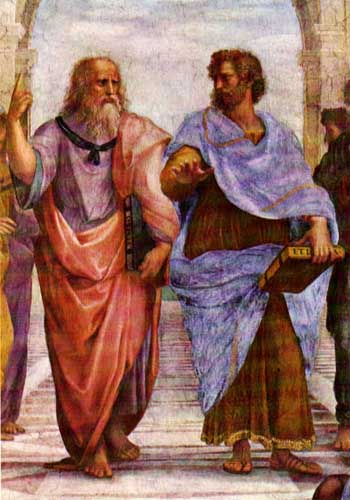
I began thinking about this, and was really upset. I thought, wow! this is the end of Western Civilization. But maybe it's not. Plato thought it was the end of Western Civilization when folks started to rely on writing instead of memory. They lost Homeric bards. But we gained some other worthwhile stuff. Maybe this will turn out the same way. I listen to my students. Some of the ones who skim and don't care of about spelling worry me. But some of them really have a lot on the ball. Just like the ones who poke along in books and paper the old fashioned way. I probably won't be around long enough to see the upshot of it, but it ought to be interesting. All I ask is that you remember Law is important, and it is old and worth keeping the chain alive. This painting of Plato teaching in the agora is from http://www.crystalinks.com/plato.html

Thursday, February 02, 2006

Yay, Martha Nussbaum, You go, girl!

Martha Nussbaum has a wonderful article in The Chronicle Review for February 3, 2006. Titled "The Moral Status of Animals," she discusses her capabilities theory of justice in the areas of human disabilities rights, cross-national jurisdictions, and animal rights. By being too slow reading it, I missed a live, online discussion of animals' moral status today. The article takes off from Prof. Nussbaum's new book, Frontiers of Justice: Disability, Nationality, Species Membership from Harvard University Press.

Happy Groundhog Day!


Evidently Punxsawtawney Phil thinks it will be another six weeks of winter. However, competing groundhogs are all agreeing that it will be an early spring. See the Wikipedia article about Groundhog Day, and enjoy this charming picture.

We have occasional groundhogs at our house. They mostly come when the peach tree is ripe enough that the peaches are hitting the ground. They can't seem to resist ripe peaches. They look like they are wearing over-sized fur pajamas. But they can really move surprisingly fast! If they feel threatened, they gallop away to the back.

Aauugghhh!!!

From the wonderful Green Knight:

Alito votes against the conservatives on his first day.

Freepers flip.

Comedy gold.

Wednesday, February 01, 2006

More about librarian development - seriously

Unlike faculty or deans, but rather like lawyers in a well-run larger firm, librarians have a ladder of development. The title "librarian" implies at least a Master's degree in library science. Very often in law libraries, there will also be a J.D. as well. Some of us are admitted to practice in one or more states and sometimes had practice experience before becoming librarians.

Librarians are usually hired at an entry-level position, and learn on the job. They grow, usually have the opportunity to go to continuing education, be active in professional organizations, and learn within their hiring organization.

Most libraries still have two large divisions, Public Services and Technical Services. Public Services tends to be the face of the library that most people are familiar with:

Reference
Reserve
Circulation

(sometimes there are other functions in Public Services as well, but these 3 are ALWAYS public, as far as I know).

Technical Services is the part of the library that orders books and other materials, keeps track of them, stamps and labels them, keeps the budget and catalogs everything. These are key to making things work well, but are usually invisible to library users.

Librarians need to know and understand about both sides of the library, even if they only plan to work on one side or the other. They need to understand how the whole system interacts, and how decisions and actions in one department will affect everything else. They need to learn lots of different ways to answer every question, because their favorite book or database may not be there. There are lots of things to learn, and to keep on learning, because everything is changing, rapidly, all the time in libraries. It is a very challenging profession that way.

So, ideally, a new librarian comes on, with good training, as Jim describes, and some good experience, in how libraries work. They begin working and get more experience in how a different library works, and more learning on the job about ways to do more different library jobs, more different ways to do their library job. They grow in the position they have been hired to do.

The new librarians go to continuing education through American Association of Law Libraries (AALL) annual meeting or regional meetings or other library organizations. They join committees and and special interest sections, both of which also teach them more, and help them network with other librarians with similar interests. Soon, they possibly even are elected to positions of leadership in these organizations. They may also be doing similar work within committees at their law school or university. More learning, more networking. Librarians tend to learn a lot about cooperation and collaboration. It is that sort of profession.

The new librarian may be promoted to a new position within the same library. They may simply take on new responsibilities with the same job title -- I hope they get more salary! Or they may be ready to move to a new library and take on a new position. Librarians move up a job ladder, learning new skills, taking on steadily increasing responsibility. It is a fairly orderly process reflected by job titles, job descriptions. You can see it in the resume, and talk about it with the applicant.

Along the way, one hopes that the new librarian also gets a chance to teach and write. The first chances to write may be in newsletters or now, in blogs. These are low-risk, low-investment writing adventures. The author does not need to invest huge amounts of time. There are no expectations of footnotes and heavy research duties. Most librarians do not have any release time for research or writing, ironically enough. Universities that have tenure for university librarians tend to have release time for librarians to write. But most other places do not really have anything in place that formally creates release time for librarians. Understanding this may help faculty members value the writing done by librarians better.

Librarians were originally the most scholarly of scholars. Some of us are still valued as scholars. Many of us are practical sorts who focus on keeping the library running smoothly so that the faculty, students and deans can do their scholarship and administration in peace. A balance of both is my ideal.

Inside Higher Ed: Did Katrina Blow Away Layoff Guidelines?

From Inside Higher Ed :: Did Katrina Blow Away Layoff Guidelines?

Since Tulane University announced faculty layoffs in December, some faculty members have questioned the way the institution arrived at its post-Katrina reorganization plan, which involved cutting back 230 faculty members, 65 of whom are tenured. Now the Association of American University Professors is seeking some answers too....

The AAUP letter explains that Tulane’s “financial exigency has not been seriously disputed, although some have asserted that the magnitude of the exigency did not warrant so many terminated appointments.” Tulane has said it faced $200 million in recovery costs after Katrina, but faculty members say they have been kept in the dark about details.

The administration “may be right” about the way it arrived at its decisions, but “nobody has any idea about the figures,” said Boumediene Belkhouche, a professor of electrical engineering who has been at Tulane for 23 years, but will have to leave in June 2007, when his department is eliminated. Tulane declared financial exigency on Dec. 8, the day the public announcements about cutbacks were made, according to Mike Strecker, a Tulane spokesman. Said Belkhouche, “There were several forums [since the announcement], and [Cowen] wouldn’t give any numbers.” AAUP guidelines call for “a primary faculty role,” according to the letter, in determining criteria by which to cut back positions....

Tulane did conform to AAUP recommendations by informing cut professors — who can teach until June 2007 — at least 12 months in advance. However, in line with AAUP’s guidelines and outlined in the Tulane Faculty Handbook, termination of tenure due to financial exigency is “reviewed by the faculty of the division in which they hold appointment, then by the Senate Committee on Faculty Tenure, Freedom and Responsibility, with ultimate review of all controverted issues by the Tulane Board of Administrators.” All of the faculty members interviewed said that they have not been granted a review, and do not expect to have any. Belkhouche said that, at one of the forums, Cowen “bluntly said that the handbook is not enforceable.” In 1998, a Louisiana state court found that the handbook was not a legal contract, but rather a statement of “company policy.”...

Beyond AAUP guidelines and the faculty handbook, some faculty members are just miffed at what they said is a general lack of southern hospitality. Several faculty members would have preferred signed termination letters, rather than the stamped ones they said they received.

Before spending 27 years on the faculty, Cook was a student at Tulane, and spent 35 consecutive years there. Cook packed up his lab, and Tuesday was his last day at Tulane. “They have not even sent me an e-mail after 27 years on the faculty,” he said.


Just where do baby librarians come from?


Well, Jim may want you to believe that baby librarians come from library schools and lead a "human"life like the rest of you folks out there. I am here to reveal the darkest secrets of librarianship.

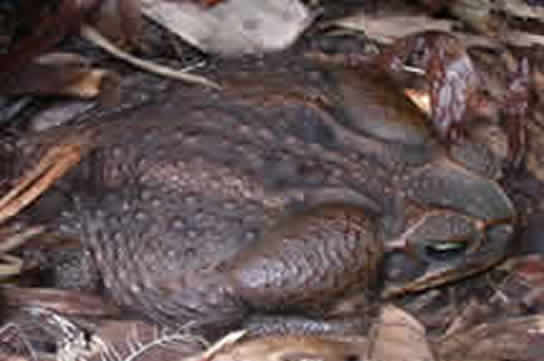
The name librarian may be a clue to those of you with a bent for wordology, the study of the sources of words. Notice how close it is to the word amphibian. The ending is just the same. The photo above is classic librarian breeding habitat. Librarians in their adult phases, when you meet them in libraries are biblorial (book-based), or some times nowadays digitorial (finger-based) life-forms.

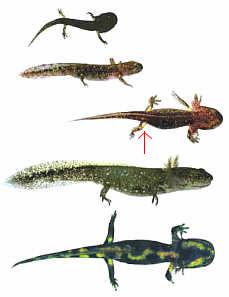
But larval forms must live in water. Aquatic, or in extreme cases, whiskey or beer-based life is the true origins of librarians. Infant (baby) librarians are hatched out in nurseries (library schools) in theses habitats. They go through larval stages, as illustrated here. You can see the various larval stages. Experts argue over whether whiskey and beer speed up or retard the growth of the larval librarian. It may vary by species or individual. I have known it to work both ways.

With proper care (see the hand?) a larval librarian can grow to basic maturity in one and a half years. But they still have some phases to move through. You can see from the illustrations here that the young librarian may grow to enormous length and size before entering the final phase. Not all librarians metamorphose into the final instar. From looking much like a salamander or hellbender, the final instar librarian matures into a toadlike being. These are the managing librarians. You can see how large and threatening they get. Notice the one threatening Bambi?

Librarians who achieve personal dominance over other librarians in their library habitat metamorphose into this toad-form. And the final form, as you can see above, becomes truly horrendous, much like a huge cow-flop. This is the most-dominant form of all, the library director.